When preparing for a year-long stay in the United States, the most concerning aspect for me was undoubtedly the education of my children. They had to attend U.S. public schools immediately, and to make it more challenging, they had to advance a grade compared to their own counterparts. For those coming to the U.S. with their children, this is a common concern. Adapting to school in a new environment and learning in a different language is a crucial aspect of this challenge.
One of the first steps is the mandatory English test administered to friends who do not use English as their native language in California. This test, known as ELPAC (English Language Proficiency Assessment for California), determines the level of language proficiency and helps tailor additional education in school to enhance comprehension. Upon registering with the school district, you receive an English test ticket.
If you complete the school registration before the new semester begins, you may receive the English test ticket during the vacation. However, if you enroll in school during the semester, you might need to take the test later, visiting the school district office for this purpose.
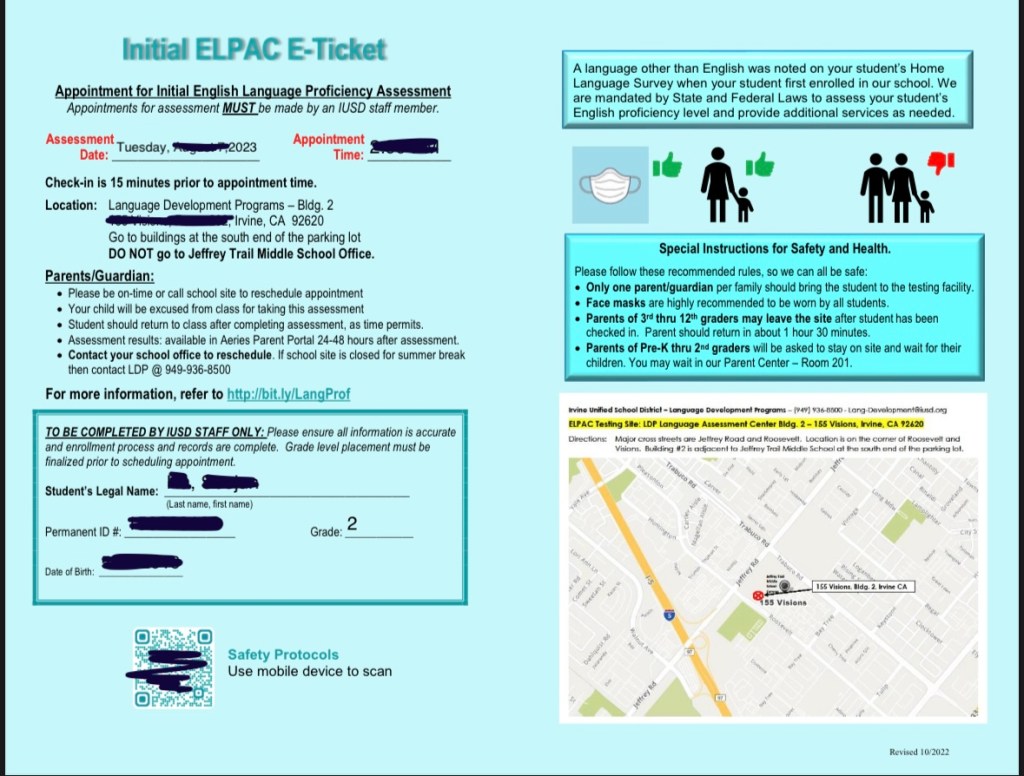
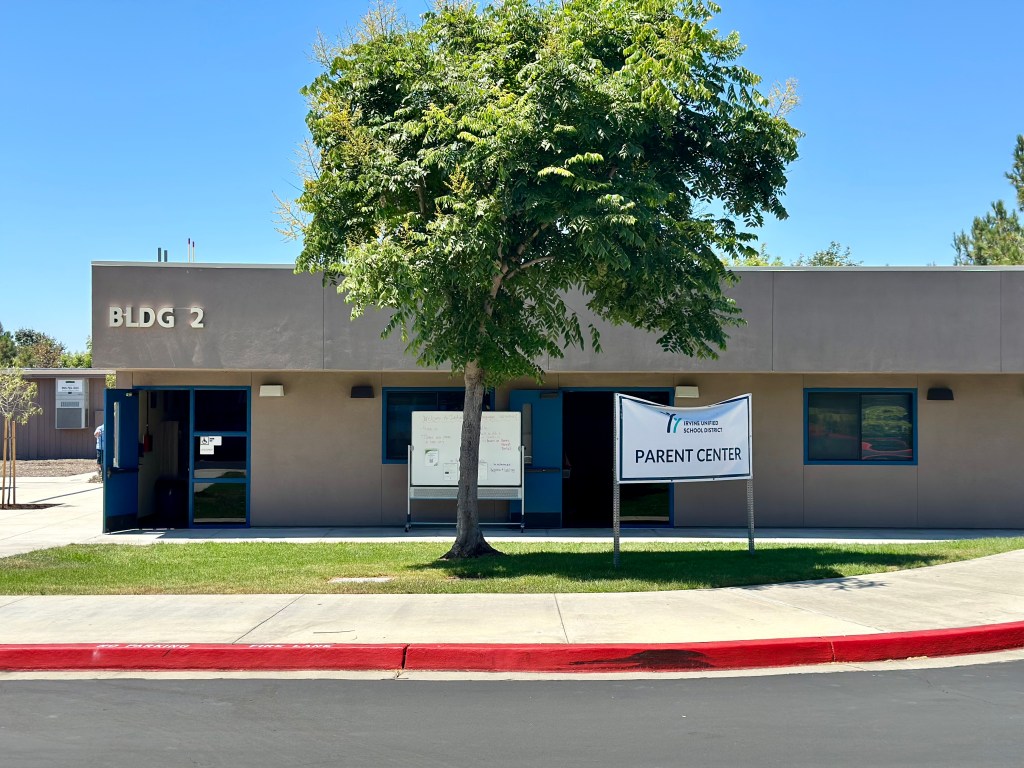
ELPAC covers four sections: Reading, Writing, Speaking, and Listening. The test is held in school district office by offline, with a teacher guiding and providing support. For younger students, it takes approximately 30 minutes. Parents can wait in a nearby classroom.
ELPAC – SPEAKING

Here are examples of ELPAC sections for a 2nd-grade level:
- Introduce themselves (name, age)
- Discuss their favorite color
- Choose a preferred section among speaking, reading, writing, and listening.
- escribe a situation based on a picture.
ELPAC – Writing
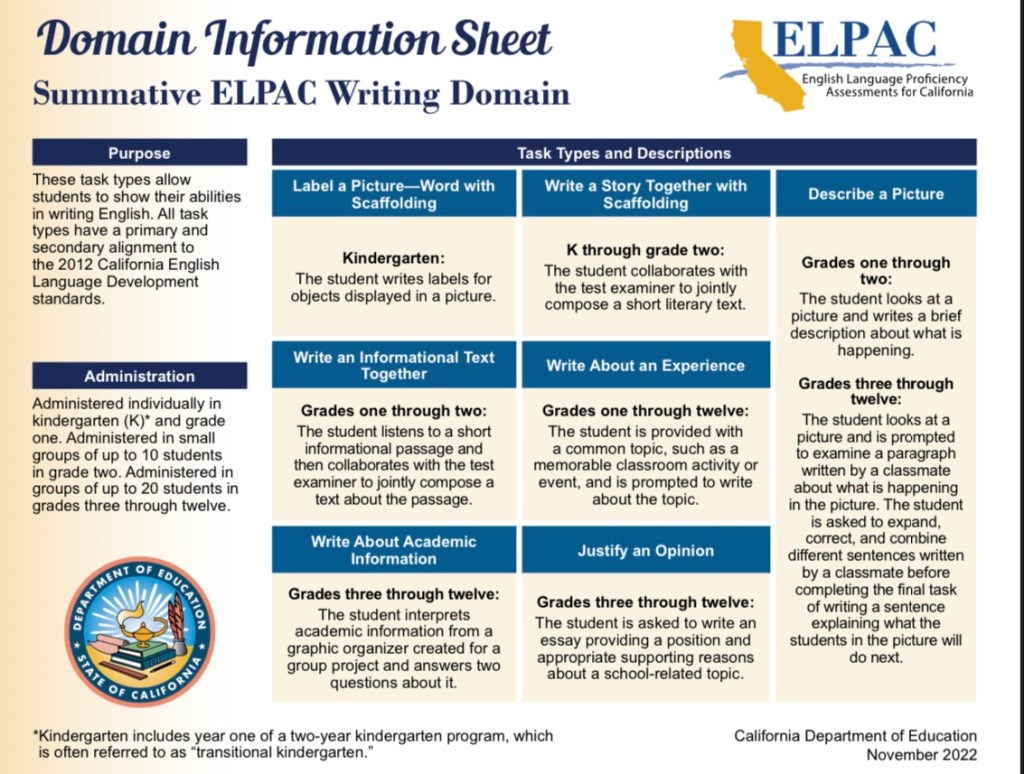
- Describe a situation based on a picture (e.g., friends playing with a ball).
- Write down information after listening to a short passage.
ELPAC – Reading

- Talk about questions related to a short passage.
- Match the most suitable title to a picture and passage.
ELPAC – Listening

- Answer questions about a short story through conversation.
- Think about who is speaking and what the story is about after hearing an example.
Before starting school, many people wonder how to prepare for ELPAC. The test covers various English language and comprehension skills. Even if your child has exposure to English through academies or other ways, the diversity of question formats may be challenging. Personally, I found that dedicating time to reading and writing, similar to how American children learn, was the most helpful.
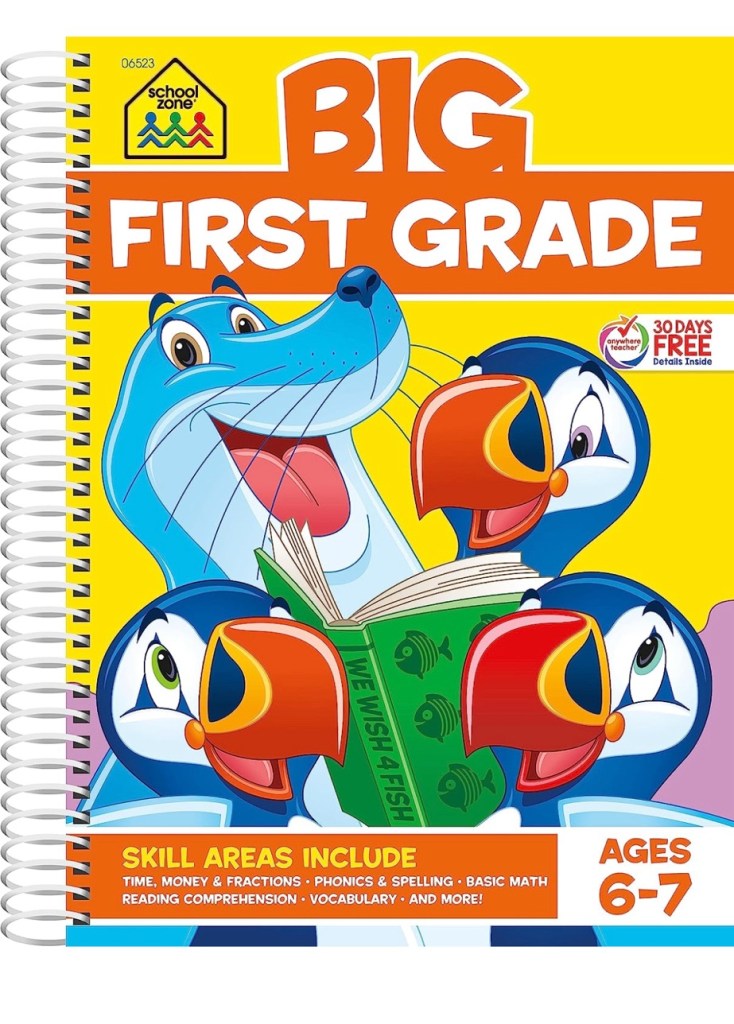
One of the books that was particularly beneficial is ‘BIG First Grade.’ This book exposes children to a wide range of question formats and topics, making it suitable for a gradual increase in difficulty. It covers alphabet, words, sentences, and gradually progresses to more challenging concepts like numbers, fractions, clocks, dates, and money. The book combines English and mathematics, making it easier for children struggling with English.
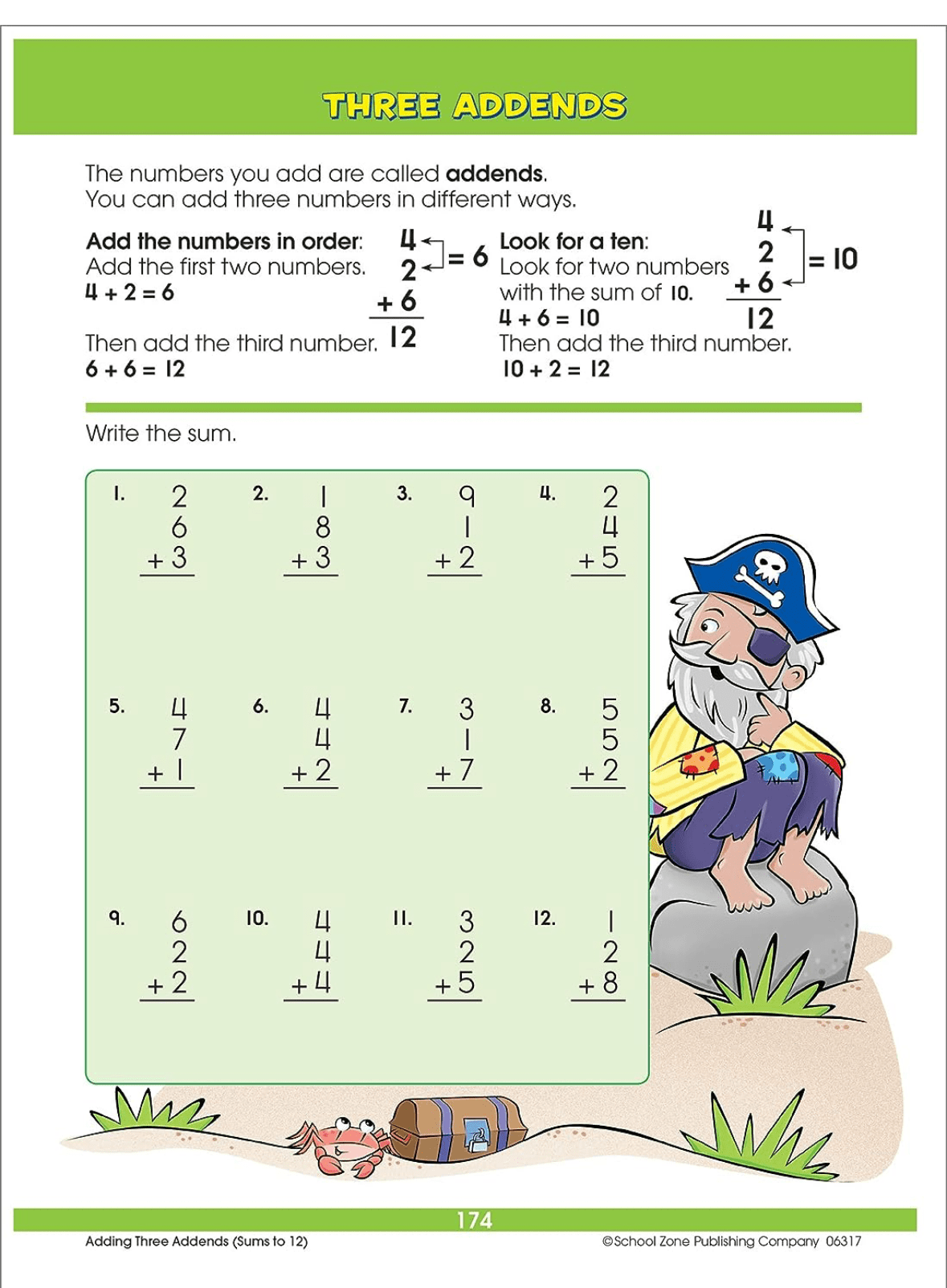

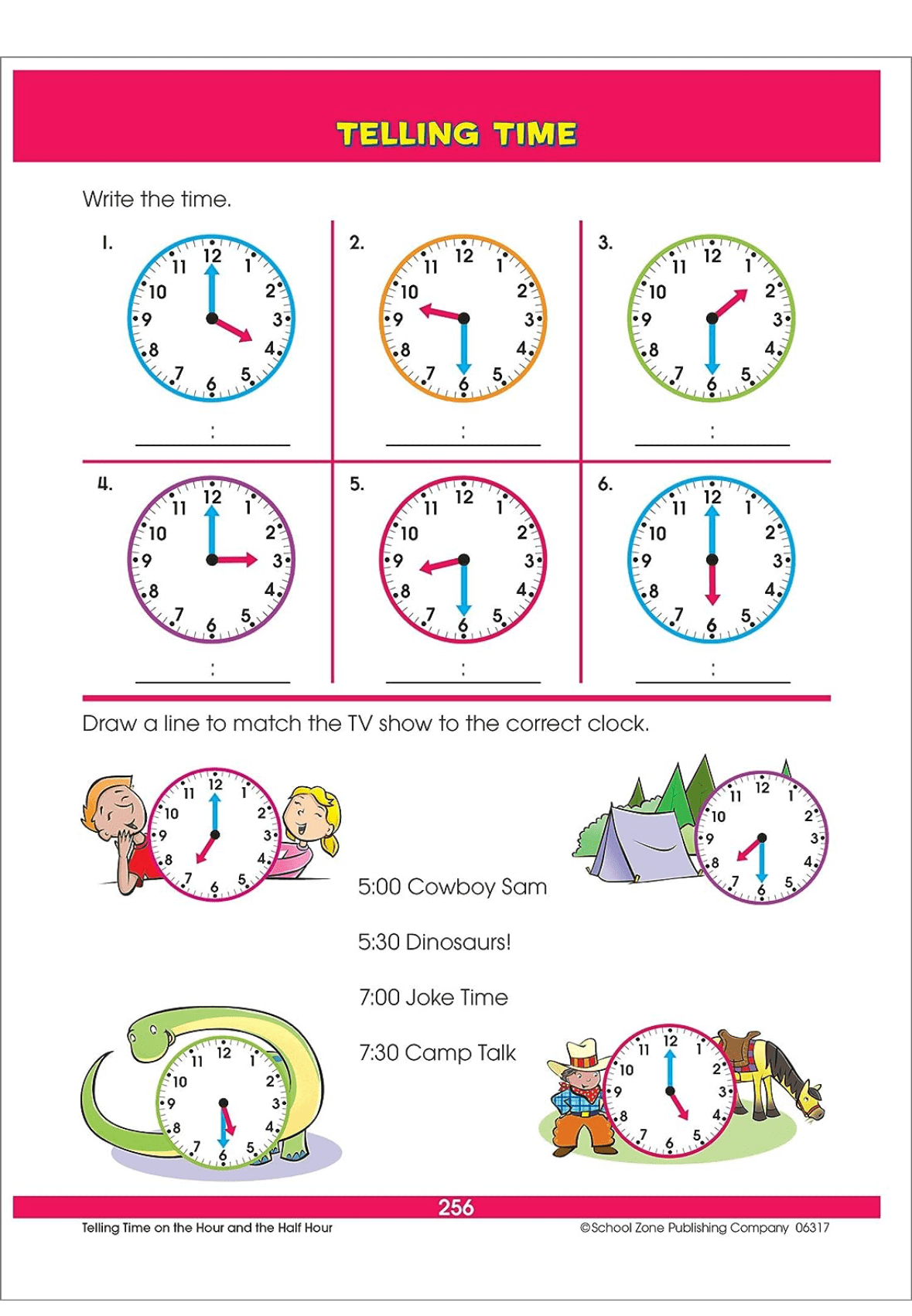
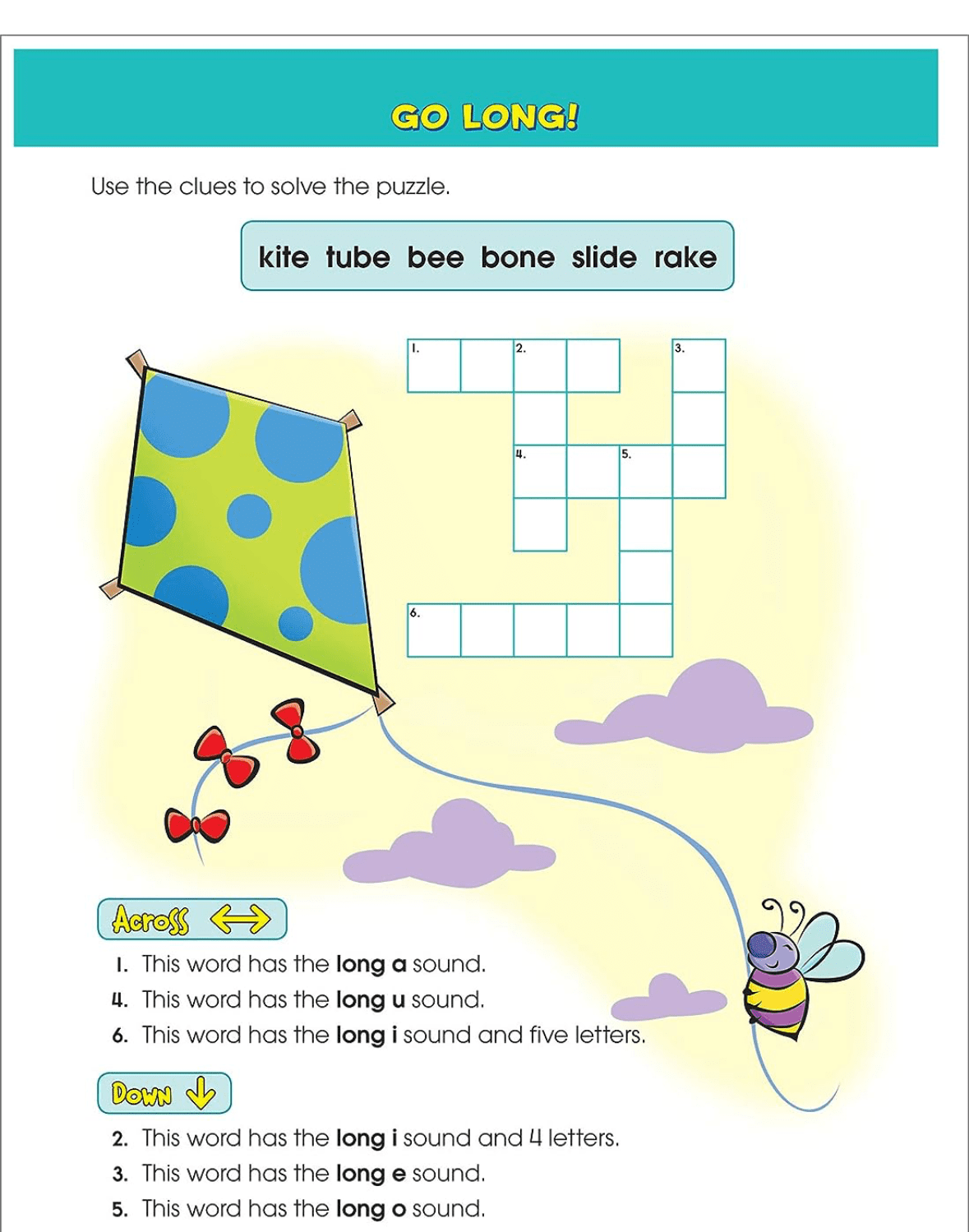
In preparation for school, the book can be a valuable resource, and the time spent on it during the summer break can be rewarding. Although it requires patience, especially for those with little exposure to English, the effort pays off.
Initial ELPAC Test Result
My child achieved an intermediate level on the initial ELPAC test, which was surprising and satisfying. This achievement sets a positive tone for the upcoming school year.
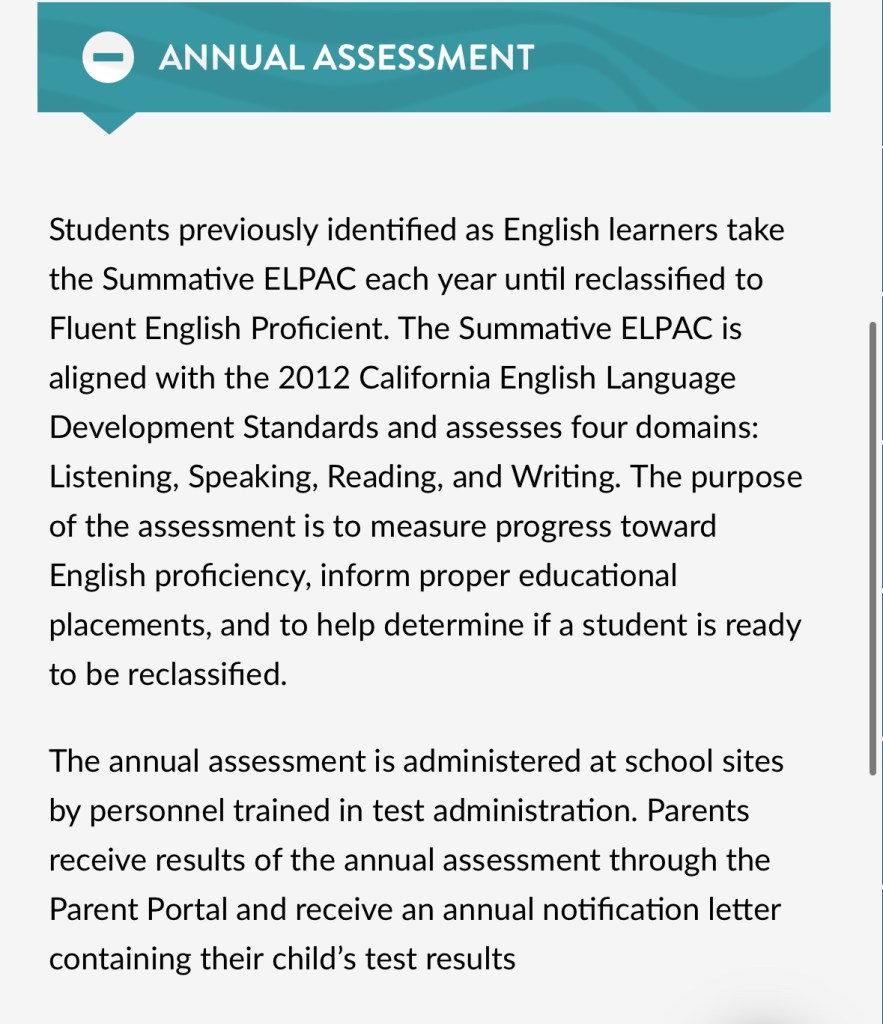
ELPAC is not a one-time test; after the initial test, an annual assessment is required to gauge progress. If your child achieves level 4 or higher in all areas, they undergo reclassification, transitioning from an English learner to an English proficient status.


Starting a new school year requires a lot of adaptation, but I hope everyone has a safe and enjoyable school life. I will continue to share useful information for adaptation on my blog, Lifestyle Loungers.





 Lifestyle Loungers
Leave a comment